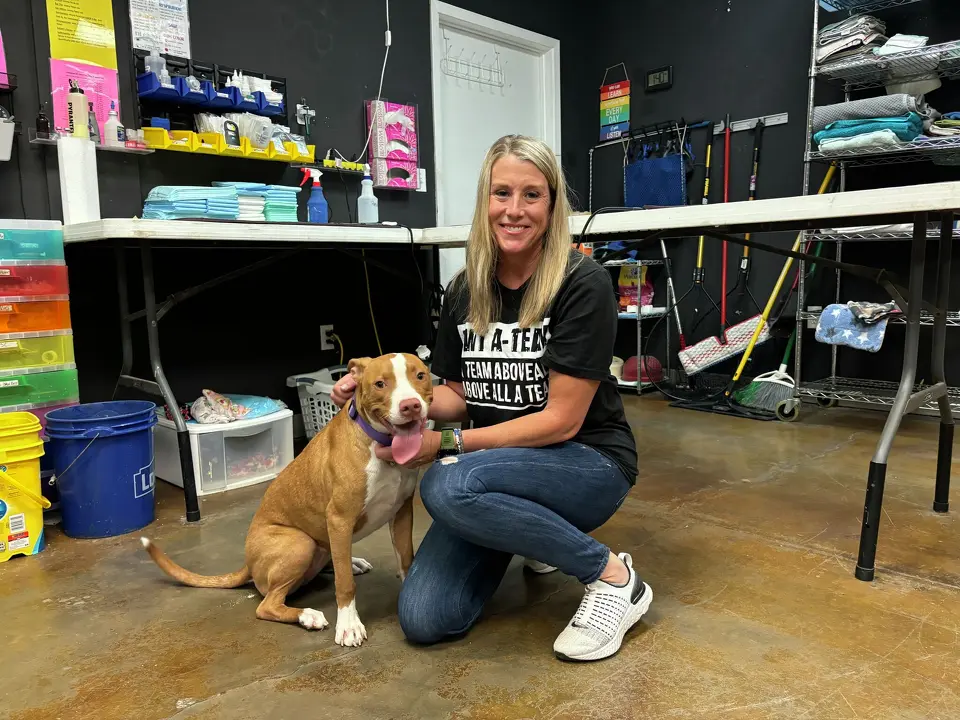
Karen Patterson compares her workday to an airstrip at DFW, where planes are coming at you from different angles.
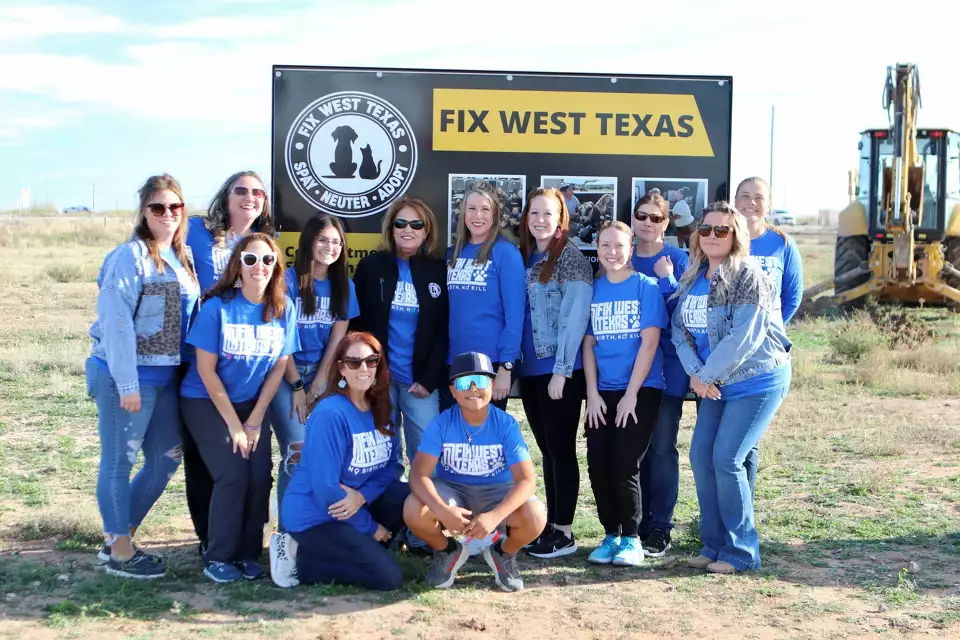
She’s the founder and executive director of Fix West Texas, a nonprofit organization that focuses on lowering the euthanasia rate and suffering of pets in the community.
Patterson, a Waco native, moved to Midland with her family when her husband took a job in the oil and gas industry. They have lived in Midland for almost 10 years now.
About five years after moving to the Tall City, Patterson came across Roscoe, a rescue dog, at a gas station, which then kick-started her journey with Fix West Texas.
Now, Patterson continues her mission with the Fix West Texas team, where each day really is as busy as an airport, especially since they are preparing for a new adventure: moving to a bigger location.
The Midland Reporter-Telegram recently sat down with Patterson to discuss her journey at Fix West Texas, the challenges she’s faced and life in Midland.
What inspired you to start Fix West Texas?
I came across a little pit bull on the side of the road that had been hit by a car. So, we gathered him up and got him medical treatment. Once he was well, we took them to the shelter, and I was ready to sign him up for their foster program, but they let me know that they don’t have a foster program. In fact, they were a high kill shelter, so he would likely be euthanized if I surrender him to them.
That was pretty eye opening and shocking to me. I started doing some open records requests and digging around for information and learned that, yes, Midland and Odessa together are about 10% of all euthanasia here in Texas. So, we’re a very high-kill area.
I started trying to figure out what was different about this area than other areas I lived in previously that didn’t have these issues. A big part of that was there was no access to low-cost spay and neuter. A lot of people were not able to spay and neuter their pets because they just couldn’t afford it. So, that’s what I did: I worked on trying to establish low-cost spay neuter here. At first, I wanted to work with the city and have the city have that done down at the shelter like other cities, but that was just a hard no.
I didn’t want to give up, so I just kept on, and we decided we would do it ourselves. That’s when I found a vet in Dallas and made an announcement that we would have a spay and neuter clinic. The location was to be announced because I did not have a location. I met a bunch of people on the internet, and one was Lori VanHoozer, and she helped me find a place. That’s when we just decided we would establish a board and make sure that the service was provided to the community going forward.
What are some challenges that you’ve faced while at Fix West Texas?
Fix West Texas is really about making a social change. Yes, we do provide services, but more than anything, we’re trying to make a social change where we elevate the importance of pets locally. And with that, we, of course, face resistance because a lot of people don’t like change. That’s probably been the biggest struggle is staying true to our mission and pressing forward and just letting the naysayers kind of fall on our side.
How has Midland changed during your time here?
When we moved here, it was during a boom, and a lot of the apartments didn’t exist. The day that we were looking for an apartment there were only two available in all of Midland. We picked one, and that was that. Now, of course, you see tons of apartments, tons of hotels and restaurants. There weren’t very many restaurants, and now there’s so many more, so the city has changed like that.
The Midland-Odessa area, it just seems like a big melting pot of people from all over the United States and all over the world. That’s the biggest way it’s changed: the growth.
I also remember during the boom at that time, we only had one H-E-B, and when we would go to the H-E-B, we couldn’t be picky. Whatever bread they had left, that’s the bread you picked. Whatever chips they had left, that’s what you bought. Don’t be so picky because, yes, there’s bread, but it might not be the kind you like. When we moved here, I would say there were limited resources, not only housing, but even grocery and stuff like that.
What’s one lesson you’ve learned while living in Midland that others may benefit from?
One of the biggest things that I’ve learned is our community is very generous. If people know you have a need, so many people in our community are able to meet that need, regardless of what it is. I think that is just really something very special about this area that I have not seen in every area that I’ve lived in.
What does Midland mean to you?
I would say family and independence. What I love the most about Midland is that the people are so nice. You really do feel like a community with everybody. It’s a big melting pot. You have people at different socioeconomic levels, from different backgrounds, but by and large, everybody respects each other’s differences. Since the majority of us are transplants, I think we show each other that we care a little more as a community, and it’s stronger because of that. Hardly any of us are actually born and raised here.
For the independence, I love Midland because I can do what I want, when I want, how I want, for the most part because there aren’t a lot of restrictions. We can do what we want, when we want, how we want, for the most part as long as it’s legal. That is just a lot of liberty that you don’t experience in other cities. In other cities, there’s expectations like this is how you do things. But here you’re really free to be your own unique person. I love that.
What’s a memory you cherish from your time at Fix West Texas?
The best memory I’ve had has to do with the distemper outbreak that we just went through. It was two days of being at the shelter 12 hours a day. It was overwhelming in so many ways. But the most overwhelming was gratitude to the everyday community member that came by to foster those animals. They not only trusted us that the animals weren’t going to infect their own dogs, but they trusted us to continue treatment and testing of those dogs and eventually re-home those dogs. It was just so overwhelming to see the everyday person come forward and really help.
That’s what I go back to, if you let people know that you have a need, our community is really good about trying to meet those needs. It could’ve been a really tragic experience. Both Beth (Meeks) and I, when we said we were going to do it, we were like what if nobody comes? What if nobody comes? I have to come, but we didn’t know that. We didn’t know everybody was coming and all the dogs would be saved.
In fact, I’m making these little trophies for the people that helped with that. This is my second batch because there were so many, but it says Midland 4/21/24, 139 dogs saved. Then I have a metal flower placed on top, so then you just like set it on your desk and you can remember. It’s been an incredible journey. We never really thought that it would take off this way, but we certainly are glad it is because we really hope we’re not only lowering euthanasia, but really making a social change where pets aren’t disposable.
How can people become involved with Fix West Texas?
They can get involved by going to our website and applying to be a volunteer. We also have a donation link if they want to become a monthly donor. We have community events if they’d like to join us to give out information about Fix West Texas. We have adoption events if anybody would like to help us with adoption events. So, there’s lots of opportunities if they want to get involved.
What’s next for Fix West Texas?
We have built a 10,000 square foot clinic that is right between Midland and Odessa of 191 behind Mid-Cities church. We will be moving in probably by the end of August or early September. We were actually going to move in July, but it got hit by that terrible hailstorm, so the roof has to be redone and some other stuff. We’re going to be a little behind on that, but we’ll be moving over there. It will just help us be able to serve more people, and it sets us up for being a resource here in Midland for perpetuity because we have an actual place. We’re very excited about that.
Over the years we’ve expanded our services. We started off with just spay, neuter and vaccinations. Now we don’t only have those clinics services, but we do end-of-life euthanasia, and we do curbside Parvo treatments. We have our pets in need program, which is a pet pantry, and then funding for people that can’t afford full price. We have our adoptions, where people for the first time have a responsible way of re-homing either their pet, or a pet a find by going through us and making sure it gets fixed, vaccinated, microchipped and then goes on to another home and bypasses the shelter or never has to go to the shelter.
Is there anything you want to Add?
We are excited about our partnership with the city of Midland. Historically, the city itself has dragged its feet a bit on advocating for spay and neuter. For the first time, in the past one to two years, they’ve made some slow, small steps forward. We really champion that. We know that they’re not necessarily moving at the breakneck speed we are, but we respect the speed that they’re moving. They recently started their own pet pantry. They get the food from us through Greater Good Charities. So, we really do value that relationship and are excited to see the city step up and lead the way into the future. We really need the city to join us and be vocal and ask residents to spay and neuter.